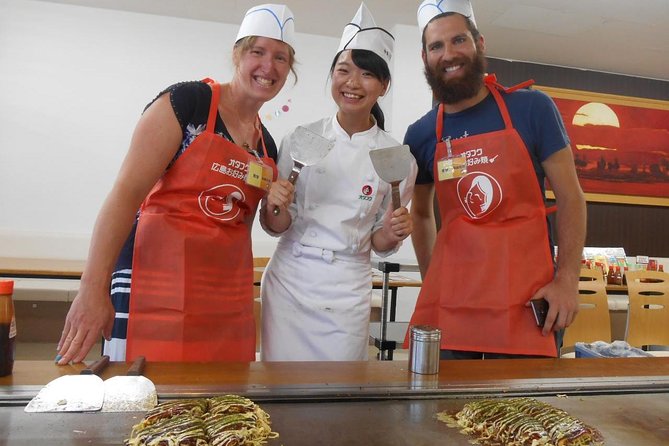
Discover the heart of Japanese cuisine in Hiroshima, Japan, with a cooking class dedicated to the city’s beloved dish: okonomiyaki. Led by a knowledgeable guide, you will master the art of cooking this pancake-like delicacy on a traditional Japanese grill.
This immersive experience not only offers a chance to create mouthwatering creations but also provides insight into the cultural and historical significance of okonomiyaki in Hiroshima.
Don’t miss the opportunity to explore the flavors and history of Hiroshima through this unforgettable cooking class.
Quick Takeaways

- Okonomiyaki originated in Hiroshima as a simple pancake-like dish made with flour, eggs, and cabbage.
- Okonomiyaki played a significant role in Hiroshima’s post-war recovery and continues to be a symbol of resilience.
- Hiroshima-style okonomiyaki has evolved over time to include various toppings and ingredients.
- Hiroshima’s okonomiyaki sauce has a savory and tangy taste, adding depth and umami flavor to the dish.
The History and Significance of Okonomiyaki in Hiroshima
Understanding the history and significance of okonomiyaki in Hiroshima is essential for appreciating the cultural and culinary importance of this beloved dish.
Okonomiyaki, which translates to ‘grilled as you like it,’ has a long history in Hiroshima. It originated as a simple pancake-like dish made with flour, eggs, and cabbage, but has evolved over time to include various toppings and ingredients.
Along With being a popular comfort food, okonomiyaki played a significant role in Hiroshima’s post-war recovery. After the devastation of World War II, okonomiyaki stalls were among the first businesses to reopen in the city, providing a sense of normalcy and nourishment to the community.
Today, okonomiyaki continues to be a symbol of resilience and a cherished part of Hiroshima’s culinary heritage.
Step-by-Step Guide to Cooking Hiroshima-style Okonomiyaki
Once you have gathered all the necessary ingredients and utensils, start by preparing the batter for the Hiroshima-style okonomiyaki. The art of teppan cooking is central to this dish, as it is traditionally cooked on a hot iron griddle. The batter consists of flour, dashi (Japanese stock), and eggs, which are whisked together until smooth.
Next, the importance of fresh ingredients in okonomiyaki cannot be overstated. The table below shows some common ingredients used in Hiroshima-style okonomiyaki:
| Ingredients | Toppings |
|---|---|
| Cabbage | Green onions |
| Bean sprouts | Pork belly |
| Noodles | Seafood |
| Eggs | Bonito flakes |
| Okonomiyaki sauce | Mayonnaise |
Once the batter is ready, it is time to assemble the okonomiyaki. The cabbage and bean sprouts are placed on the teppan first, followed by the noodles and the batter. The toppings are then added, and everything is cooked until golden brown and crispy. Finally, the okonomiyaki is served with a drizzle of okonomiyaki sauce and a dollop of mayonnaise. Enjoy!
Exploring the Unique Flavors of Hiroshima’s Okonomiyaki Sauce
To truly experience the essence of Hiroshima’s okonomiyaki, visitors must delve into the unique flavors found within the sauce. Exploring different okonomiyaki variations allows one to appreciate the diverse range of flavors and ingredients used in Hiroshima-style okonomiyaki.
Unlike the sauce used in Osaka-style okonomiyaki, which is sweeter and thicker, Hiroshima’s sauce has a savory and tangy taste that complements the dish’s other components. The key ingredients in Hiroshima-style okonomiyaki sauce include Worcestershire sauce, soy sauce, ketchup, and sometimes oyster sauce or bonito flakes. These ingredients give the sauce its distinct umami flavor and add depth to the overall taste of the dish.
Discovering the Techniques Behind Hiroshima’s Favorite Dish
Through hands-on instruction and expert guidance, participants in the cooking class will learn the techniques behind Hiroshima’s favorite dish, okonomiyaki. Okonomiyaki has a rich history and has evolved over time, adapting to different regional styles and variations. Here are some key points to understand about the history and evolution of this beloved dish:
- History and evolution:
- Okonomiyaki originated in Osaka during the Edo period and was initially made with cabbage and flour batter.
- After World War II, Hiroshima developed its own style of okonomiyaki, incorporating noodles and layers of ingredients.
- The dish became popular as an affordable and filling meal during the city’s post-war recovery.
- Variations and regional styles:
- Hiroshima-style okonomiyaki is characterized by its layered construction, starting with a base of batter and cabbage, followed by noodles, meat, and other toppings.
- Other regions in Japan have their own variations of okonomiyaki, such as Kansai-style, which is more like a pancake, and Tokyo-style, which uses a thinner batter.
In the cooking class, participants won’t only learn how to prepare the Hiroshima-style okonomiyaki but also gain insights into its history and the various regional styles that exist.
Uncovering the Cultural Connection Between Okonomiyaki and Hiroshima’s Recovery
Uncovering the cultural connection, participants in the cooking class will explore how okonomiyaki played a role in Hiroshima’s recovery after World War II.
Hiroshima’s post-war recovery was a challenging and arduous process, but the cultural significance of okonomiyaki played a significant role in rebuilding the city and bringing a sense of normalcy back to its people.
Okonomiyaki, a savory pancake made with a batter, cabbage, and various toppings, became a symbol of resilience and community in Hiroshima. It provided a source of comfort and sustenance during a time of hardship, and its popularity grew as the city rebuilt.
Today, okonomiyaki stands as a reminder of Hiroshima’s strength and determination in overcoming adversity, and it continues to be a beloved dish that showcases the city’s unique cultural heritage.
A Taste of Hiroshima: Sampling Seasonal Desserts and Culinary Oysters
Guests will have the opportunity to indulge in three seasonal desserts and savor culinary oysters, all providing a taste of Hiroshima’s local flavors. Sampling local delicacies is a must when exploring Hiroshima’s food scene, and this cooking class offers a chance to experience some of the city’s culinary traditions.
Here are some highlights of the seasonal desserts and culinary oysters that participants can enjoy:
- Seasonal Desserts:
- Traditional Japanese wagashi, such as matcha-flavored mochi and red bean paste-filled dorayaki.
- A refreshing citrus-infused jelly dessert, perfect for the summer months.
- A rich and creamy black sesame pudding, showcasing the unique flavors of Hiroshima.
- Culinary Oysters:
- Freshly shucked Hiroshima oysters, known for their plumpness and briny sweetness.
- Grilled oysters with a garlic butter sauce, offering a delightful combination of flavors.
- Oyster tempura, providing a crispy and flavorful twist on this seafood delicacy.
- Oyster sashimi, allowing guests to experience the pure and delicate taste of the oysters.
Immersive Cooking Experience: Samurai-themed Aprons and Stylized Bandanas
Participants in the cooking class can enhance their experience by donning samurai-themed aprons and stylized bandanas. These unique accessories not only add a touch of fun and authenticity to the cooking process but also create an immersive atmosphere that transports participants back to the time of the samurai. The samurai-themed aprons feature traditional Japanese designs, such as cherry blossoms or samurai armor, while the stylized bandanas showcase intricate patterns and symbols associated with samurai culture. By wearing these accessories, participants can truly enjoy the cooking experience, channeling the spirit and discipline of the samurai as they learn to prepare Hiroshima’s favorite food, okonomiyaki. It’s a truly unique and memorable way to connect with Japanese culture and cuisine.
| Aprons | Bandanas |
|---|---|
| Samurai-themed designs | Stylized patterns |
| Adds authenticity and fun | Enhances immersive experience |
| Connects participants with samurai culture | Channel the spirit of the samurai |
Exploring Hiroshima’s Culinary Delights: Craft Beer and More
Visitors to Hiroshima can indulge in the city’s culinary delights by savoring craft beer and other delectable dishes. Here are some highlights of Hiroshima’s culinary scene:
- Craft Beer: Hiroshima has a thriving craft beer scene, with numerous breweries offering a wide range of flavors and styles. Beer enthusiasts can enjoy locally brewed beers that perfectly complement the city’s food.
- Okonomiyaki: Traditional ingredients used in okonomiyaki, Hiroshima’s favorite food, include cabbage, noodles, and various toppings like pork, seafood, and vegetables. This savory pancake is cooked on a teppan and topped with a special sauce, mayonnaise, and bonito flakes. It’s a must-try dish when visiting Hiroshima.
- Seafood: Being a coastal city, Hiroshima is known for its fresh and delicious seafood. From oysters to grilled fish, you can enjoy a wide variety of seafood dishes that showcase the region’s rich marine resources.
- Local Delicacies: Hiroshima is also famous for other local delicacies like Hiroshima-style tsukemen, a type of ramen with thick noodles dipped in a flavorful broth, and momiji manju, a maple leaf-shaped cake filled with sweet bean paste.
With its craft beer scene and diverse culinary offerings, Hiroshima is a paradise for food lovers.
Here's some more great Japan experiences nearby that we think you'll like.
Frequently Asked Questions
Is the Hiroshima-Style Okonomiyaki Sauce Different From Other Types of Okonomiyaki Sauce?
Yes, the Hiroshima-style okonomiyaki sauce is different from other types of okonomiyaki sauce. It has a unique combination of ingredients and flavors, giving it a distinct taste that sets it apart.
What Are Some of the Techniques Used to Cook Hiroshima-Style Okonomiyaki?
The techniques used to cook Hiroshima-style okonomiyaki include layering ingredients on a teppan, flipping it skillfully, and timing the cooking process. These techniques result in a unique texture and flavor that sets it apart from other types of okonomiyaki.
How Does the Cultural Connection Between Okonomiyaki and Hiroshima’s Recovery Manifest in the Dish?
The cultural significance of okonomiyaki in Hiroshima’s recovery is evident in the dish’s ability to bring the community together. Its popularity and unique flavors have had a positive impact on the local economy and fostered a sense of pride and resilience.
Can You Provide More Information About the Seasonal Desserts and Culinary Oysters Included in the Cooking Class?
The cooking class includes seasonal desserts and culinary oysters. Participants can enjoy these treats while learning to cook Hiroshima’s famous okonomiyaki. It’s a unique opportunity to explore the flavors and history of Hiroshima.
What Makes the Aprons and Bandanas Provided in the Cooking Class Samurai-Themed?
The aprons and bandanas provided in the cooking class are samurai-themed. They incorporate elements such as stylized designs and colors that resemble traditional samurai attire, adding a cultural touch to the experience. The samurai-themed cooking attire has cultural significance and enhances the overall atmosphere of the class.
The Sum Up
To sum it up, the okonomiyaki cooking class in Hiroshima offers foodies a unique opportunity to not only learn how to cook the city’s beloved dish, but also gain a deeper understanding of Japanese culture and history.
Led by knowledgeable guides, you will discover the step-by-step process of preparing okonomiyaki on a traditional Japanese grill.
The class also includes a sample menu featuring Hiroshima-style okonomiyaki, seasonal desserts, and a selection of drinks, allowing participants to fully enjoy the flavors and history of Hiroshima.
Where To Stay In Tokyo
Tokyo visitor levels are currently at an all-time high so make sure to book your hotels early. Tip most hotels booked with booking.com have free cancelation so book as soon as you know your date and you can always cancel if you change your mind.